Netherlands Antilles Connectivity: A Guide to eSIMs & Wi-Fi
Navigate the islands of the Netherlands Antilles with reliable internet by understanding your options, from local SIMs and roaming to the convenience of an eSIM.
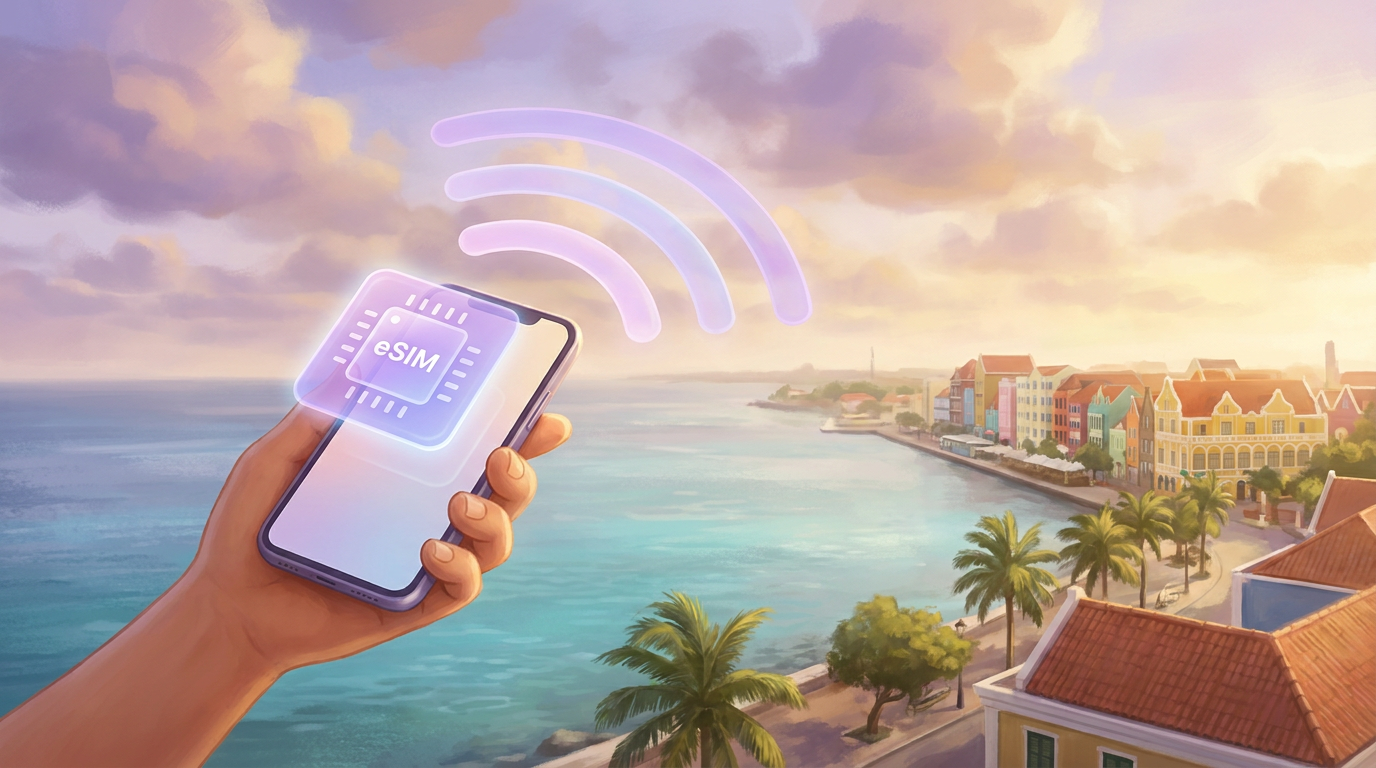
The islands of the Netherlands Antilles—including Curaçao, Sint Maarten, Bonaire, Saba, and Sint Eustatius—are a dream destination for many travelers. Whether you're diving in pristine waters, exploring colonial architecture, or simply relaxing on a sun-drenched beach, staying connected is essential for navigation, sharing moments, and keeping in touch. This guide will walk you through the various connectivity options available, helping you choose the best solution for a smooth and connected journey through this beautiful Caribbean region.
Mobile Networks and Coverage
The Netherlands Antilles is served by several key mobile network operators, with Digicel and Flow being the most prominent across the islands. These providers have invested in their infrastructure, ensuring that coverage is generally excellent in populated areas, major towns, and popular tourist destinations. You can expect reliable 4G/LTE service in places like Willemstad, Philipsburg, and the main resort areas, which is more than sufficient for streaming, video calls, and using GPS-based map services.
However, as with any island geography, coverage can become less consistent as you venture into more remote or rugged parts of the islands. If your itinerary includes hiking in national parks or visiting secluded beaches, you may experience weaker signals or occasional drop-offs. 5G is still in the early stages of deployment and is not widely available, so travelers should plan for a solid 4G/LTE experience as the standard. The specific networks available can vary slightly between islands, but the overall quality remains high for typical travel needs.
Connectivity Options for Travelers
When you travel to the Netherlands Antilles, you have three primary methods for getting your phone online: using your home provider's international roaming plan, purchasing a physical local SIM card upon arrival, or installing a travel eSIM before you depart. Each option comes with its own set of trade-offs in terms of cost, convenience, and setup requirements. Understanding these differences is key to making the right choice for your travel style and budget.
International Roaming
Using your existing mobile plan through international roaming is undoubtedly the easiest option. Your phone connects to a local network automatically, and you can use data, make calls, and send texts just as you would at home. However, this convenience often comes at a significant cost. Many home carriers charge high daily fees or exorbitant per-megabyte rates for data, which can lead to an unexpectedly large bill upon your return. Before relying on roaming, it is crucial to contact your provider to understand their specific pricing for the Caribbean region and to see if they offer any affordable international packages.
Local SIM Cards
For travelers on a longer stay or those who need a local phone number, purchasing a physical SIM card from a provider like Digicel or Flow is a practical choice. These can typically be bought at the international airports, official provider stores in main towns, or various authorized resellers. This option usually offers the best value for data, providing generous allowances at local prices. The main downside is the initial effort required: you must locate a vendor, potentially wait in line, and go through the registration process, which may require your passport. Your phone must also be unlocked to accept a new SIM card.
Travel eSIMs: The Modern Choice
An eSIM (embedded SIM) is a digital SIM that allows you to activate a cellular plan without needing a physical nano-SIM. This is an increasingly popular choice for international travelers due to its immense convenience. You can purchase and install a data plan before you even leave home. Using a service like a SimMaxi eSIM for the Netherlands Antilles allows you to activate your data plan right after landing, bypassing the need to hunt for a store or swap physical cards. This is particularly beneficial if you are island-hopping, as you can maintain seamless connectivity without starting the SIM card search over again on each island.
Wi-Fi and Other Considerations
Free Wi-Fi is widely available across the Netherlands Antilles, especially within the tourism sector. You can expect to find reliable connections in most hotels, resorts, cafes, restaurants, and bars. While this is great for casual browsing or uploading photos at the end of the day, the quality and speed can be inconsistent. During peak hours, networks in popular spots can become congested and slow. Furthermore, public Wi-Fi networks are not secure, making them unsuitable for sensitive activities like online banking or accessing private work documents.
For security on public networks, using a Virtual Private Network (VPN) is highly recommended. A VPN encrypts your internet traffic, protecting your personal data from potential eavesdroppers on unsecured Wi-Fi. While internet censorship is not a concern in the Netherlands Antilles, a VPN also allows you to access geo-restricted content from your home country, such as your favorite streaming services or news websites, which might otherwise be blocked abroad.
Ultimately, the best way to stay connected in the Netherlands Antilles depends on your priorities. For the ultimate convenience and immediate connectivity upon arrival, an eSIM is hard to beat. For longer stays or heavy data users who don't mind the initial setup, a local SIM offers excellent value. Whichever you choose, planning your connectivity strategy in advance will ensure you can navigate, share, and communicate effortlessly while enjoying everything these stunning Caribbean islands have to offer.
Stay connected when you land
With a SimMaxi eSIM, you can get online without hunting for a physical SIM card.