Bangladesh Connectivity Guide: eSIM, Wi-Fi & Mobile Data
Navigate Bangladesh's digital landscape with our guide to mobile networks, staying connected with an eSIM, and finding reliable Wi-Fi from Dhaka to Chittagong.
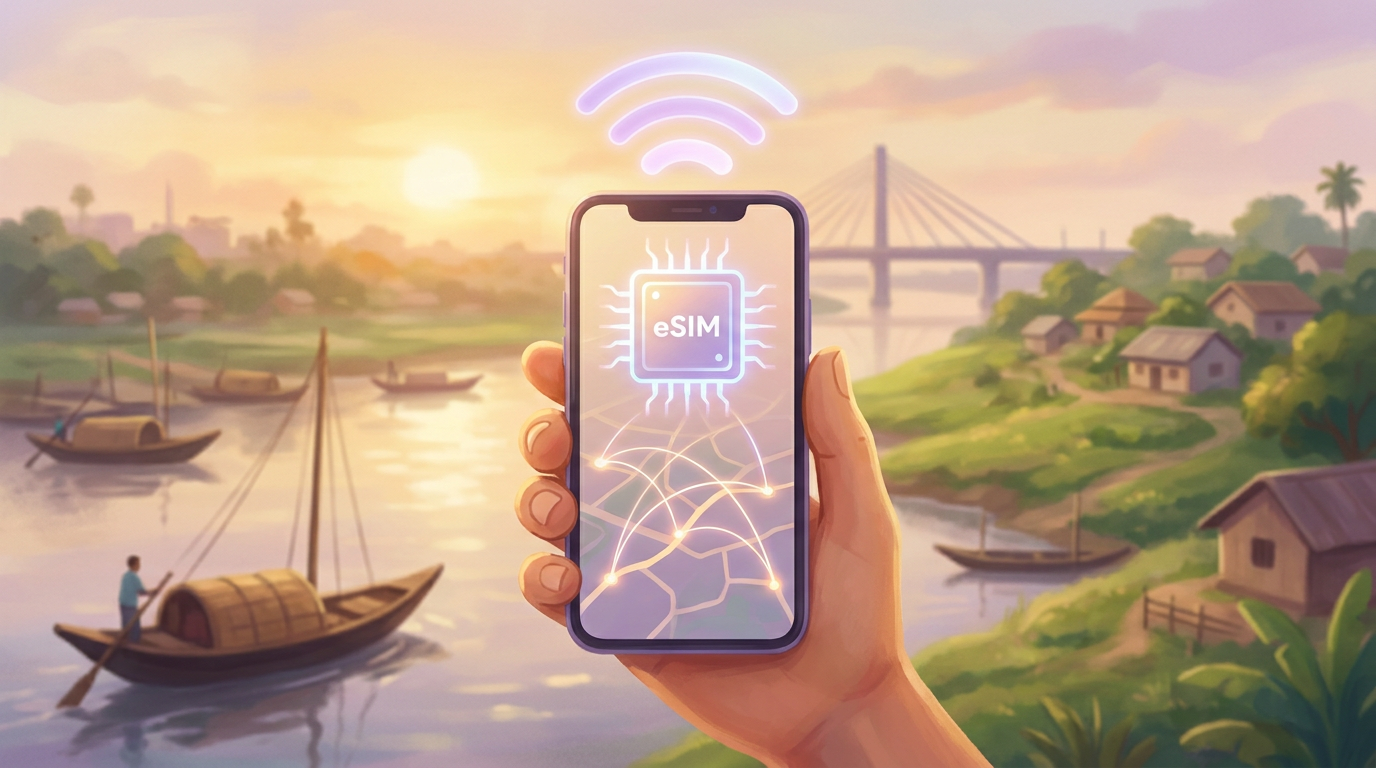
For any traveler visiting Bangladesh, reliable internet access is more than a convenience—it's a vital tool. From navigating the bustling streets of Dhaka with ride-sharing apps to translating a menu in a local restaurant or sharing photos of the Sundarbans mangrove forest, staying connected makes your journey smoother and safer. This guide will walk you through your connectivity options, ensuring you can make an informed choice for your travel style and needs.
Understanding Mobile Networks in Bangladesh
Bangladesh has a competitive mobile market with several major providers. The most prominent names you will encounter are Grameenphone, Robi, and Banglalink. Grameenphone generally boasts the widest network coverage across the country, including many rural areas, making it a popular choice. Robi (which merged with Airtel) and Banglalink offer strong competition, particularly in urban centers, and often have competitive data package prices. 4G/LTE is widespread in cities and major towns, providing speeds sufficient for most travel needs.
While mobile infrastructure is robust in urban hubs like Dhaka, Chittagong, and Sylhet, coverage can be less consistent as you travel to more remote or rural regions. In these areas, your connection might drop from 4G to 3G, or you may find service to be intermittent. It's a practical consideration for travelers planning to venture off the beaten path. If your itinerary includes remote destinations, checking coverage maps for your chosen provider is a wise step, with Grameenphone often being the most reliable choice for nationwide travel.
Connectivity Options for Travelers
Buying a Local SIM Card
Purchasing a local SIM card upon arrival is a traditional and cost-effective option for many travelers, especially for longer stays. You can find official outlets for providers like Grameenphone or Robi at Hazrat Shahjalal International Airport (DAC) in Dhaka and in towns and cities across the country. However, the process is more involved than in many other countries. Due to government regulations, you must provide your passport, a passport-sized photograph, and submit biometric data (a fingerprint scan) to register the SIM in your name. This can take some time and might not be the most convenient first step after a long flight.
Using Your Home Carrier's Roaming
Using your home provider's international roaming plan is undoubtedly the easiest option, as it requires no setup. Your phone works as soon as you land. However, this convenience almost always comes at a significant cost. Daily roaming fees and exorbitant per-megabyte data charges can quickly add up, leading to an unexpectedly high phone bill after your trip. Before you travel, contact your provider to understand their specific rates for Bangladesh, but in most cases, this will be the most expensive way to stay connected.
The Modern Alternative: An eSIM
An eSIM (embedded SIM) offers a perfect balance of convenience and cost control. It's a digital SIM that allows you to activate a data plan without needing to insert a physical card. Using a travel eSIM from a provider like SimMaxi allows you to purchase and install a data plan for Bangladesh directly on your phone before you even leave home. This means you can connect to a local network the moment you land, bypassing airport queues and registration procedures. You also get to keep your primary SIM active for calls and texts from home, which is a major advantage for dual-SIM capable phones.
Wi-Fi Availability and Digital Security
Free Wi-Fi is commonly available in mid-range to luxury hotels, guesthouses, and an increasing number of modern cafes and restaurants in major cities. However, the quality and speed can be highly variable. It might be fast in your hotel lobby but slow in your room. While hotel Wi-Fi is great for uploading photos or making video calls, it's not always reliable enough for consistent, on-the-go connectivity when you're out exploring. Don't depend on it as your sole source of internet.
When using any public Wi-Fi network in Bangladesh or elsewhere, it's crucial to prioritize your digital security. These networks are often unsecured, making your personal data vulnerable. Using a Virtual Private Network (VPN) is highly recommended. A VPN encrypts your internet connection, protecting your information from potential interception, which is especially important when accessing banking apps or other sensitive accounts. A VPN can also be useful for accessing services from your home country that might be geo-restricted abroad.
Ultimately, how you choose to stay connected in Bangladesh depends on your priorities. For the tech-savvy traveler seeking immediate and hassle-free data, an eSIM is an excellent choice. For long-term visitors on a tight budget who don't mind the registration process, a local SIM offers great value. By understanding these options and planning ahead, you can ensure that your digital connection is one less thing to worry about, allowing you to focus on the incredible experiences Bangladesh has to offer.
Stay connected when you land
With a SimMaxi eSIM, you can get online without hunting for a physical SIM card.