A Food Lover's Guide to the Dominican Republic
Explore Dominican flavours, from the everyday Bandera and festive sancocho to coastal seafood, regional specialities, cacao, and what to know about bills and tipping.
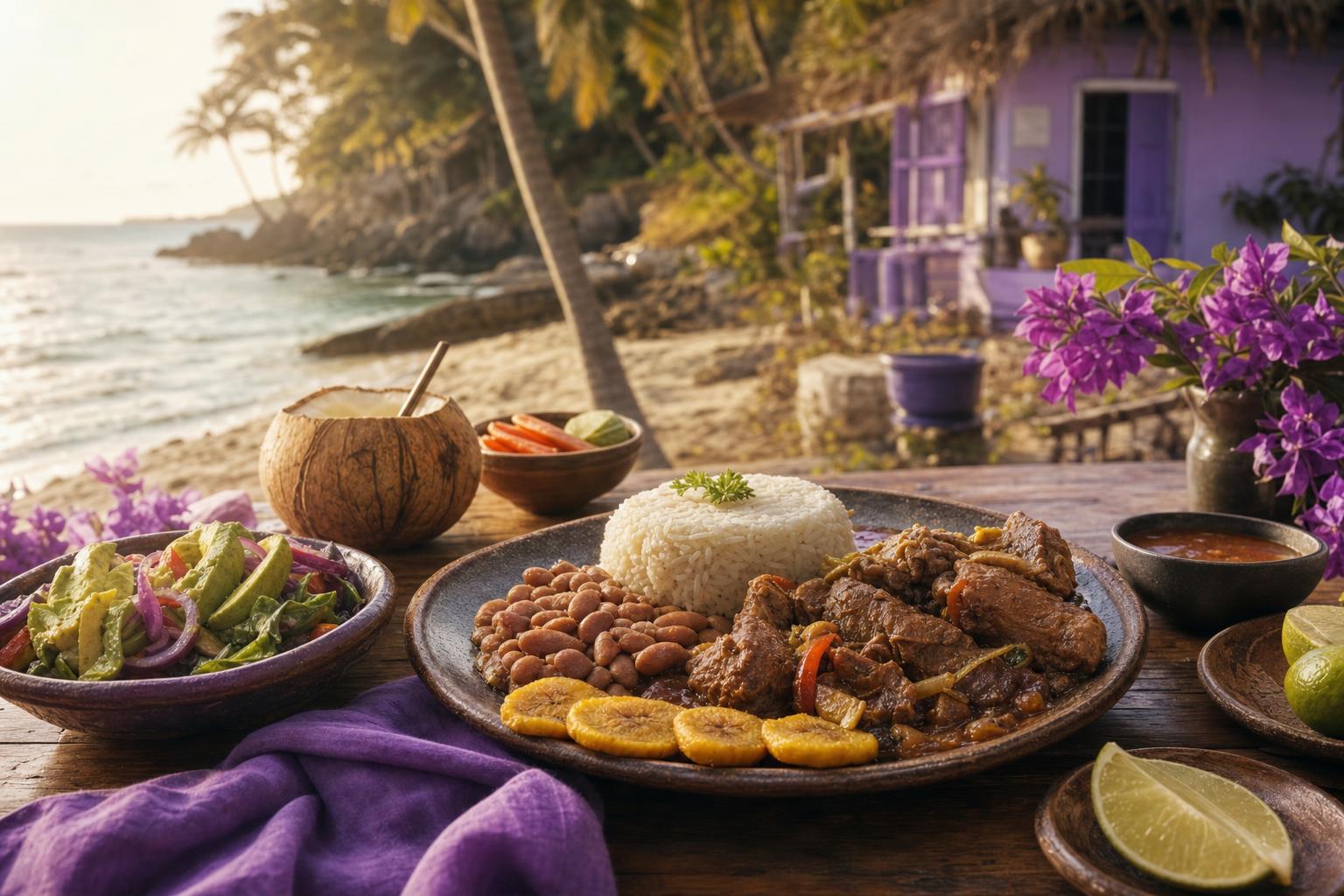
The Dominican Republic's official tourism site describes the country's gastronomy as the product of a mixture of cultures, including the Taino, Africans and Spaniards, along with later arrivals. That blend shows up in the flavours of each region, in family celebrations and in the dishes served on the beach. This guide draws on the Dominican Republic's official tourism board to highlight what to try and how to eat well on your trip. Facts below are checked as of October 2026.
Signature dishes
La Bandera Dominicana, or the Dominican Flag, is the dish most associated with everyday Dominican eating. The tourism board describes it as white rice with beans and stewed chicken, beef or pork, and explains that its colours refer to the national flag: red for the beans, white for the rice and the meat as the third element. It is a good first order if you want to see how local cooks balance simple ingredients.
Sancocho is described by the tourism board as one of the country's most iconic dishes. It is a stew that combines several ingredients, and the Dominican version is distinguished by the use of seven different meats, mixed with tubers and vegetables. The board says it is the dish Dominican families enjoy most on special occasions, so it often turns up as a celebration meal.
Mofongo is another popular dish. The tourism board says its origin is African and that it is made from fried green plantain mashed in a pestle and mortar with garlic, olive oil and pork rinds. Over time, cooks have created versions using cassava, ripe plantains or yam, and a combination called trifongo made from cassava, green plantain and ripe plantain. Fillings can include chicken, seafood or shrimp, and it can be served topped with cheese or mushroom cream. The board adds that mofongo appears on restaurant menus across the country.
The tourism board highlights fried fish served with crunchy green plantain tostones, often on beaches where the catch of the day is served. Grilled octopus is another dish the board lists among those found in Dominican restaurants, where it is valued for freshness and careful cooking.
Regional flavours
- Santo Domingo: the tourism board says Dominican seasoning, known as sazon or sofrito, relies on oregano, garlic, onion, peppers, tomatoes, capers and olives, and that the city has restaurants serving many international cuisines, often with a Dominican twist.
- Samana: the board describes fresh fish from the region and shrimp from Sanchez, and recommends coconut fish, a regional dish in which coconut milk takes centre stage. It also mentions grilled fish on the beach with a pina colada made with fresh pineapple.
- Pedernales: the board calls the area the country's largest source of spiny lobster, prepared grilled or to order at local restaurants.
- Montecristi: the board mentions chivo liniero, stewed or oven-baked goat, served at small roadside restaurants along the Montecristi to Navarrete highway.
- Barahona: the board mentions goat stews and baked goat among local specialities, and notes the area as a major source of coffee and green plantains.
- Puerto Plata: the board says mofongo and sancocho are stars here, alongside seafood, and that visiting a rum factory is part of the local tradition.
Festive foods, cacao and coffee
The tourism board notes that Christmas and Easter are the two most important family holidays. On Christmas Eve, it says, whole pigs are roasted in backyards through the night while families listen to music and share drinks. During Holy Week, Dominicans enjoy bowls of habichuelas con dulce, a sweet bean dessert typical of that time of year. If you travel during these periods, ask your hosts or accommodation where you can try the traditional dishes.
Cacao is another way to taste the country. The tourism board says Dominican cocoa is among the country's most valuable agricultural exports and is produced in several areas, most characteristically in the north. It points to experiences such as Kah Kow in Santo Domingo's Colonial City, the Cortes Hermanos Visitor Center, the Cocoa Trail in San Francisco de Macoris, and cocoa routes in Puerto Plata. It also lists community tourism experiences linked to coffee, cassava bread, organic bananas and honey. Check opening hours and booking requirements directly with each operator.
Bills, tipping and practical dining tips
The official tourism guide explains that restaurant bills automatically include a 10 percent service charge, apart from the 18 percent sales tax that appears as ITBIS. It adds that it is customary and good practice to leave an additional 10 percent to make sure the server receives a tip. Taxi drivers do not receive gratuity, but you may reward exceptional service. The tourism board gives typical restaurant hours as until 10 pm to midnight from Sunday to Thursday and until 2 am on Friday and Saturday, while noting that holidays follow special schedules, so check each venue.
The local currency is the Dominican peso (RD$). The tourism board says businesses in tourist destinations, including restaurants and bars, tend to accept dollars, but you receive a less favourable rate than at banks, and most prices are in pesos. It describes ATMs from established banks as widely available. English is widely spoken in tourist areas, which makes ordering easier, but it is still worth asking staff what is in a dish if you have dietary needs.
A mobile data plan helps when you want to look up a restaurant's hours, read a menu or use a translation app. You can install a SimMaxi eSIM before your trip so it is ready when you land.
Stay connected when you land
With a SimMaxi eSIM, you can get online without hunting for a physical SIM card.
Dominican Republic Prepaid eSIM Data Plans
| Plan | Data Allowance | Validity | Price (USD) |
|---|---|---|---|
| Dominican Republic 1GB 7 Days | 1 GB | 7 Gun | $3.50 USD |
| Dominican Republic 3GB 30 Days | 3 GB | 30 Gun | $8.30 USD |
| Dominican Republic 5GB 30 Days | 5 GB | 30 Gun | $12.20 USD |
| Dominican Republic 10GB 30 Days | 10 GB | 30 Gun | $18.50 USD |
| Dominican Republic 20GB 30 Days | 20 GB | 30 Gun | $30.00 USD |
| Dominican Republic 50GB 30 Days | 50 GB | 30 Gun | $65.70 USD |