A Food Lover's Guide to Turkey: What to Eat and Why
From Istanbul's bustling markets to Aegean olive groves, discover the flavors that define modern Turkish culture.

Turkey's culinary landscape is a vibrant tapestry woven from centuries of history, stretching far beyond the globally famous kebab. It's a journey of regional flavors, from the olive oil-drenched vegetables of the Aegean coast to the hearty grains of Anatolia. Preparing for a trip here means getting ready for a full sensory experience, where every meal tells a story of tradition, hospitality, and place.
Beyond the Kebab: Signature Regional Dishes
To truly understand Turkish cuisine, you need to explore its regionality. In the Aegean and Mediterranean regions, the diet is rich in fresh greens, herbs, and high-quality olive oil, with dishes like artichoke hearts in oil (Zeytinyağlı Enginar) taking center stage. Head to the Black Sea coast, and you'll find an abundance of hamsi (anchovies) prepared in countless ways, from fried to baked in rice pilaf. Central Anatolia, the country's heartland, is known for its pastries, grains, and legumes, giving us delights like manti, often described as Turkish dumplings.
The star of many Turkish tables is the meze spread. These small, flavorful dishes are meant for sharing and kickstart a leisurely meal. Look for haydari, a thick yogurt dip with garlic and mint, or ezme, a spicy paste of tomatoes, peppers, and pomegranate molasses. For a main course, try İmam Bayıldı, a classic vegetarian dish of eggplant stuffed with onions, garlic, and tomatoes, slow-cooked in olive oil until it melts in your mouth. Its name famously translates to 'the imam fainted,' presumably from its deliciousness.
- İskender Kebap: A specialty from Bursa, featuring thinly sliced lamb over pide bread, generously topped with tomato sauce, melted butter, and a side of yogurt.
- Pide: A boat-shaped flatbread with various toppings. Try 'kuşbaşılı' with diced meat or 'ıspanaklı' with spinach and cheese.
- Menemen: A popular breakfast skillet of eggs scrambled with tomatoes, green peppers, and onions, perfect for scooping up with fresh bread.
- Künefe: A decadent dessert from the Hatay region made with shredded pastry and unsalted cheese, soaked in sweet syrup and topped with pistachios.
The Pulse of the City: Navigating Turkish Street Food
The streets of Istanbul, Izmir, and Ankara are alive with the sounds and smells of incredible food being prepared on the go. Street food in Turkey is not just a quick bite; it's a core part of the urban culinary culture, offering some of the most memorable and affordable flavors of your trip. From vendors with historic carts to tiny storefronts with a single specialty, there's always something new to try around the corner.

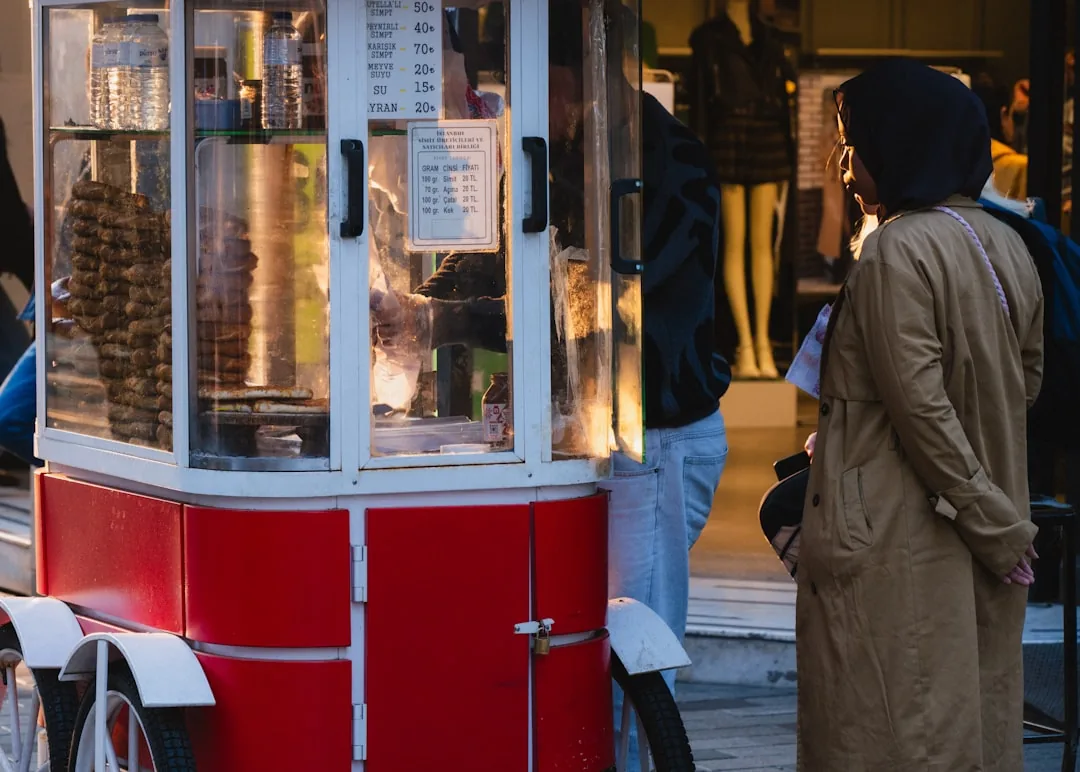
Start your day like an Istanbul local with a simit, a circular bread encrusted with sesame seeds, bought from a red cart. For a seaside snack in neighborhoods like Eminönü, grab a Balık Ekmek, a grilled fish sandwich with onions and lettuce served right off the boats. In the evening, especially in the lively Ortaköy district, you'll find rows of vendors selling Kumpir—enormous baked potatoes mashed with butter and cheese, then piled high with your choice of toppings like olives, corn, and sausages.
- Midye Dolma: Mussels stuffed with herbed and spiced rice, sold by the piece. The vendor will keep handing them to you until you say stop.
- Islak Burger: 'Wet' burgers doused in a garlicky tomato sauce, a late-night staple around Taksim Square.
- Tavuk Pilav: A simple but deeply satisfying dish of chicken and rice, often topped with chickpeas and sold from mobile glass carts.
- Çiğ Köfte: A spicy bulgur 'patté' (now almost always vegan) seasoned with herbs and spices, served in a lettuce leaf or lavash wrap.

Dining Like a Local: Turkish Etiquette and Traditions
In Turkey, a meal is a social ritual. Hospitality, or 'misafirperverlik,' is a cornerstone of the culture, and sharing food is its primary expression. Dinners, in particular, are often long, leisurely affairs focused on conversation and connection. Whether you're in a sophisticated restaurant or a family home, you'll be encouraged to take your time and savor both the food and the company.
You will be offered çay (tea) constantly. Served in small, tulip-shaped glasses, this black tea is a symbol of welcome and friendship. Accepting it is a gracious gesture. Turkish coffee (Türk kahvesi) is a different experience—it's stronger, served in a small cup, and meant for slow sipping after a meal. Don't drink the thick grounds at the bottom; they are sometimes used for a bit of fun fortune-telling.
- Say 'Afiyet olsun' before or after a meal. It's the equivalent of 'Bon appétit' and is always appreciated.
- Bread is considered sacred and is served with almost every meal. Use it to scoop up sauces, but never waste it or treat it disrespectfully.
- When dining out in a group, it's uncommon for the bill to be split. Typically, one person—often the host or eldest—will insist on paying for everyone.
- Pacing is key. Especially when enjoying meze, eat slowly and save room for the main courses that will follow.
A single cup of coffee is remembered for forty years.
— Turkish Proverb
Stay Connected While You Savor Turkey
Navigate to the best lokantas in Fatih, share photos of your delicious künefe from Kadıköy, and look up ferry times without worrying about expensive roaming fees. A Simmaxi eSIM for Turkey gives you instant, affordable data from the moment you land, so you can focus on the flavors, not the phone bill. Just scan a QR code and you're connected.
View Turkiye eSIM plans →